Digital Marketing Roadmap for Beginners – Step-by-Step Learning Path
Starting digital marketing can feel confusing—too many skills, tools, and opinions everywhere. This Digital Marketing Roadmap for Beginners is designed to give you a clear, step-by-step learning path so you know what to learn, when to learn it, and why it matters.
At TechTerapias, we’ve created this roadmap to help beginners understand digital marketing from the ground up. You’ll learn the core fundamentals, explore essential skills like SEO, blogging, social media marketing, and online tools, and build a strong foundation without overwhelm. This roadmap focuses on practical learning, ethical growth, and long-term success—no shortcuts, no hype.
Whether you’re a student, freelancer, blogger, or aspiring digital marketer, this roadmap will guide you through each stage with clarity and confidence. Follow it step by step, apply what you learn, and grow your digital skills the right way.
Follow each stage in order and focus on learning one step at a time.
Step 1: Understand Digital Marketing Basics
Before learning tools or strategies, it’s important to understand what digital marketing actually is. Digital marketing refers to promoting products, services, or content using online channels such as search engines, websites, social media, and email.
At this stage, focus on:
What digital marketing is and why it matters
Different digital marketing channels
How businesses and creators grow online
Goal: Build a strong foundation and the right learning mindset.
Step 2: Learn SEO Fundamentals
Search Engine Optimization (SEO) is the backbone of long-term digital growth. SEO helps websites and content appear on search engines like Google when people search for information.
In this step, you should learn:
How search engines work
Basic keyword research concepts
On-page SEO fundamentals
Beginner-friendly SEO best practices
Goal: Understand how organic traffic works and why SEO is essential.
Step 3: Blogging & Content Creation
Content is at the heart of digital marketing. Blogging is one of the best ways for beginners to practice digital marketing skills while creating long-term value.
Here you will learn:
How blogs and websites work
Basics of content writing
Creating helpful, user-focused content
Structuring content for readability and SEO
Goal: Learn how to create valuable content that attracts and helps users.
Step 4: Social Media Marketing Basics
Social media plays a major role in building visibility, engagement, and trust online. This step introduces how social platforms support digital marketing efforts.
Focus on learning:
Popular social media platforms and their purpose
Basic content sharing strategies
Audience engagement fundamentals
Consistent and ethical social media practices
Goal: Understand how social media supports brand and content growth.
Step 5: Affiliate Marketing Concepts
Once you understand content and traffic, you can explore ethical online earning models. Affiliate marketing is one of the most common beginner-friendly monetization methods.
In this stage, learn:
What affiliate marketing is
Trust-based recommendations
Beginner-friendly monetization concepts
Goal: Understand monetization without chasing shortcuts or hype.
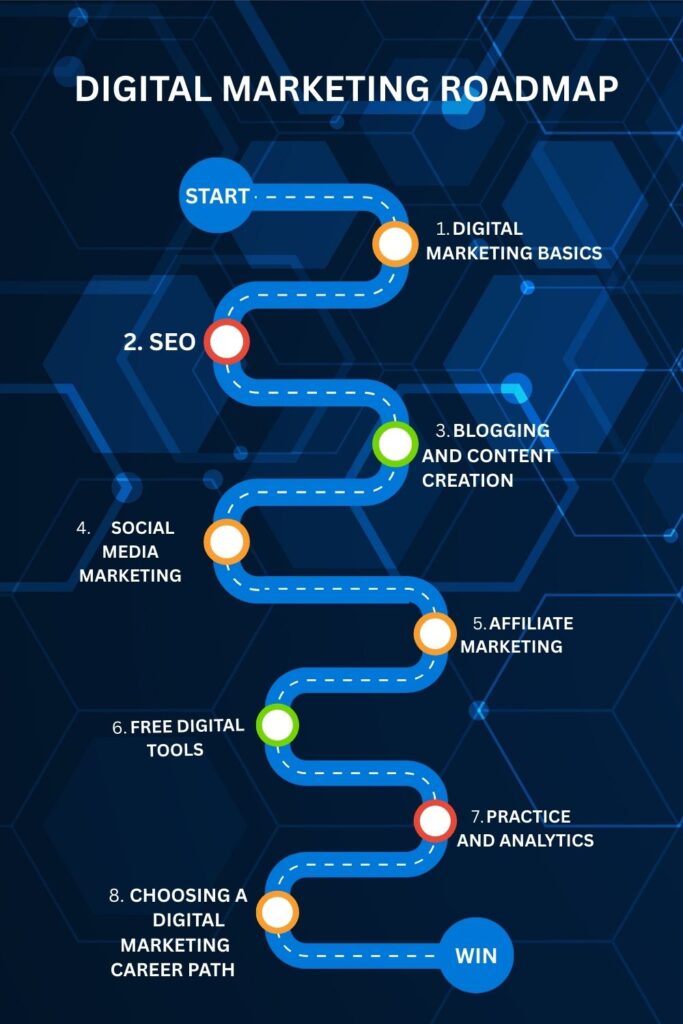
Step 6: Use Free Tools & Digital Resources
Digital marketing becomes easier with the right tools. Beginners should start with free and trusted tools to avoid unnecessary complexity.
Learn about:
Basic SEO tools
Content and productivity tools
Image optimization tools
Simple analytics and tracking basics
Goal: Work smarter using tools that support learning and efficiency.
Step 7: Practice, Analyze & Improve
Learning without practice does not lead to growth. This step focuses on applying what you’ve learned and improving over time.
At this stage:
Practice creating content and optimizing it
Track basic performance metrics
Learn from mistakes and results
Improve skills through consistency
Goal: Build confidence through real-world application.
Step 8: Choose Your Digital Marketing Path
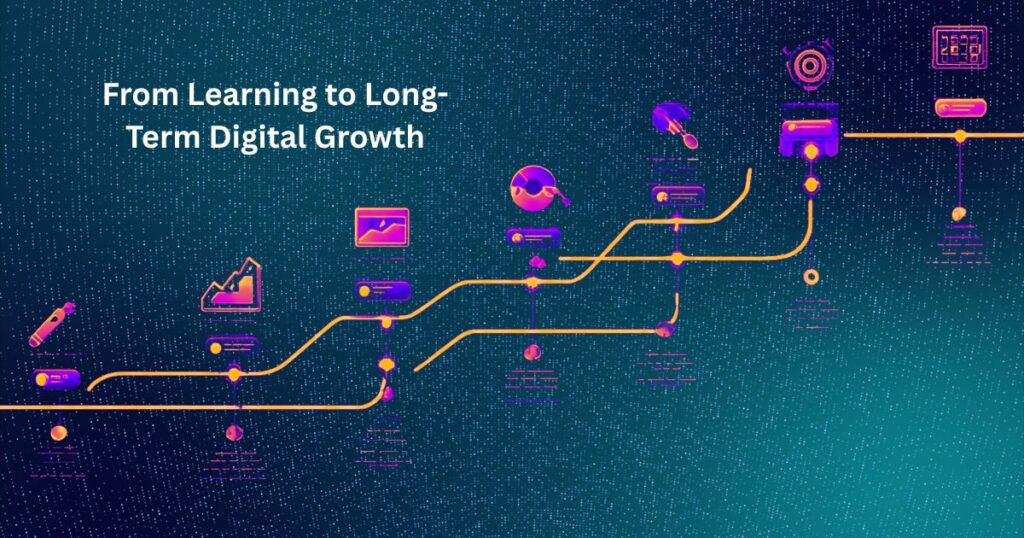
After understanding the fundamentals, you can choose a direction based on your interests and strengths.
Common beginner paths include:
SEO specialist
Blogger or content creator
Affiliate marketer
Freelancer
Digital skills for business growth
Goal: Select a clear direction and continue learning with purpose.
Final Advice for Beginners
Digital marketing is not about quick results—it’s about learning, practice, and continuous improvement. This roadmap is designed to help you move forward with clarity and confidence, one step at a time.
Focus on learning the basics first, apply what you learn, and grow gradually. With consistency and the right guidance, digital marketing can become a valuable long-term skill.
Start Your Journey
Begin with one step today and explore beginner-friendly guides, how-to tutorials, and practical resources on TechTerapias to start learning digital marketing the right way.
FAQs ( Freequently Asked Questions)
A digital marketing roadmap is a step-by-step learning plan that shows beginners what to learn first, what comes next, and how different digital marketing skills connect with each other.
Yes. Digital marketing is beginner-friendly and does not require prior technical knowledge. With a clear roadmap and consistent practice, anyone can start learning from scratch.
The basics can be learned in 2–3 months with regular practice. However, digital marketing is a continuous learning process, and skills improve over time through real-world application.
Beginners should start with digital marketing fundamentals, followed by SEO basics, content creation, and understanding how online platforms work before moving to advanced topics.
Yes. SEO is one of the most important parts of digital marketing because it helps websites and content get organic traffic from search engines like Google.
No. Basic digital marketing does not require coding skills. Most tools and platforms are beginner-friendly, and coding is optional for advanced customization.
Yes. Many digital marketing skills can be learned using free resources, guides, tools, and practice projects. Paid courses are optional, not mandatory for beginners.
After learning the basics, beginners can choose paths such as SEO specialist, content creator, blogger, affiliate marketer, freelancer, or digital marketing professional.
Yes. Digital marketing is a valuable long-term skill because businesses, creators, and brands continue to rely on online platforms for growth, visibility, and engagement.
*** These FAQs are designed to help beginners understand the digital marketing learning process clearly and confidently.