Digital Marketing for Beginners: Complete Step-by-Step Guide
Digital Marketing for Beginners in India: Meaning, Benefits & Career
Digital marketing for beginners is the perfect starting point for anyone who wants to promote products, services, or personal brands online using the internet. In simple words, digital marketing means reaching the right audience through platforms like Google, social media, websites, email, and online ads.
Table of Contents
ToggleToday, businesses of all sizes use digital marketing to grow faster, attract customers, and increase sales at a lower cost than traditional marketing. Whether you are a student, freelancer, blogger, or business owner, learning digital marketing basics can open new career and income opportunities. This beginner-friendly guide will help you understand digital marketing step by step.
What Is Digital Marketing?
Digital Marketing Meaning in Simple Words
Digital marketing means promoting products, services, or brands using the internet and digital platforms. In simple words, it is a way of reaching people online where they spend most of their time—on Google, social media, websites, email, and mobile apps.
Instead of using newspapers, TV, or posters, digital marketing uses online tools to show the right message to the right audience at the right time. Businesses use digital marketing to attract customers, build trust, and increase sales. For beginners, digital marketing is an easy and affordable way to start online marketing and grow a career or business.
How Digital Marketing Works?
Digital marketing works by connecting businesses with their target audience through online channels. First, a business creates content, ads, or offers based on what people are searching for online. Then, platforms like search engines, social media, websites, or email deliver that content to the right users. When people click, watch, or sign up, their actions are tracked using digital tools. Marketers analyze this data to see what is working and what is not. Based on the results, strategies are improved to get more traffic, leads, and sales. This process makes digital marketing measurable, flexible, and highly effective.
Digital Marketing vs Traditional Marketing
Digital marketing and traditional marketing differ mainly in how they reach people. Traditional marketing uses offline methods like newspapers, TV, radio, banners, and flyers, where results are hard to measure. Digital marketing uses online platforms such as Google, social media, websites, and email, allowing businesses to track clicks, views, and sales in real time. Digital marketing is more affordable, targeted, and flexible, making it ideal for beginners and small businesses. Traditional marketing reaches a broad audience but lacks precision. Today, most businesses prefer digital marketing because it offers better control, measurable results, and higher return on investment.
⇒ Learn more in our Digital Marketing Basic Guide.
Why Digital Marketing Is Important Today
Growth of Internet & Smartphone Users
The rapid growth of internet and smartphone users has changed how people search, shop, and communicate. Today, millions of users access the internet daily through smartphones, making online platforms more powerful than ever. People use their phones to search on Google, watch videos, scroll social media, and buy products online. This shift has increased the demand for digital marketing, as businesses now follow their customers online. For beginners, this growth creates huge opportunities to learn digital marketing skills and reach a large audience at a low cost. As internet usage continues to rise, digital marketing will keep growing.
Digital Marketing for Small Businesses
Digital marketing is especially useful for small businesses because it is affordable and highly effective. Unlike traditional advertising, small businesses can promote their products or services online with a limited budget. Using tools like Google search, social media, websites, and email marketing, they can reach the right customers at the right time. Digital marketing also allows small businesses to track performance, understand customer behavior, and improve strategies easily. For beginners and local business owners, digital marketing helps build brand awareness, attract more customers, and compete with bigger brands without spending a lot of money.
Digital Marketing for Personal Branding
Digital marketing plays a key role in building a strong personal brand online. It helps individuals showcase their skills, knowledge, and expertise through platforms like websites, blogs, social media, and video channels. By creating valuable content and staying consistent, people can build trust and connect with their target audience. Digital marketing also makes it easier to grow visibility, attract opportunities, and stand out in a competitive market. For beginners, personal branding through digital marketing can lead to freelancing work, job offers, collaborations, or online income. A strong personal brand helps you build credibility and long-term success online.
17 Benefits of Digital Marketing
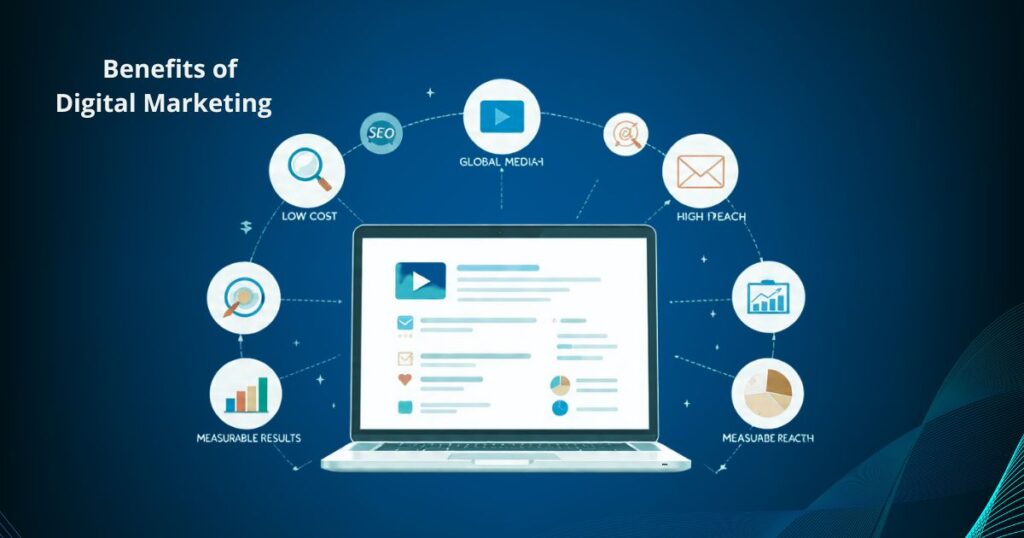
Digital marketing offers many advantages for businesses, professionals, and beginners who want to grow online. Below are the 17 most important benefits of digital marketing explained in simple words.
1. Cost-Effective Marketing
Digital marketing is more affordable than traditional advertising like TV, newspapers, or billboards. Even with a small budget, businesses can promote their products online effectively.
2. Global Reach
With digital marketing, you can reach customers worldwide. A website or social media page allows businesses to connect with people beyond geographical limits.
3. Local Targeting
Digital marketing also supports local marketing. Businesses can target customers in specific cities or areas, which is very useful for local shops and services.
4. Targeted Audience
You can show ads or content only to people who are interested based on age, location, interests, or behavior. This increases the chance of conversions.
5. Measurable Results
One of the biggest benefits is tracking. You can measure clicks, traffic, leads, and sales in real time using digital tools.
6. Faster Results
Unlike traditional marketing, digital marketing can give quick results. Paid ads and social media promotions can generate traffic instantly.
7. 24/7 Online Presence
Your website, ads, and content work day and night. Even when you are not active, digital marketing continues to bring visitors and leads.
8. Brand Awareness
Regular online presence helps build brand recognition. People start trusting brands they see frequently on search engines and social media.
9. Higher Conversion Rates
Digital marketing focuses on interested users, which increases the chances of turning visitors into customers.
10. Customer Interaction
Businesses can directly interact with customers through comments, messages, emails, and reviews, helping build strong relationships.
11. Flexibility and Control
You can start, pause, or change campaigns anytime. This flexibility helps businesses adjust strategies quickly.
12. Data-Driven Decisions
Digital marketing is based on data, not guesswork. Marketers analyze performance and improve campaigns for better results.
13. Easy to Start for Beginners
Anyone with basic internet knowledge can start digital marketing. No advanced technical skills are required at the beginning.
14. Supports Small Businesses
Small businesses can compete with big brands online by using smart strategies and quality content instead of large budgets.
15. Automation Opportunities
Email marketing, ads, and lead generation can be automated, saving time and effort while improving efficiency.
16. Personal Branding Growth
Digital marketing helps individuals build personal brands, showcase expertise, and attract career or freelancing opportunities.
17. High-Demand Career Skill
Digital marketing skills are in high demand. Learning digital marketing opens doors to jobs, freelancing, blogging, and online income opportunities.
⇒ Learn more in our Benefits of Digital Marketing for Digital marketing for beginners.
Types of Digital Marketing
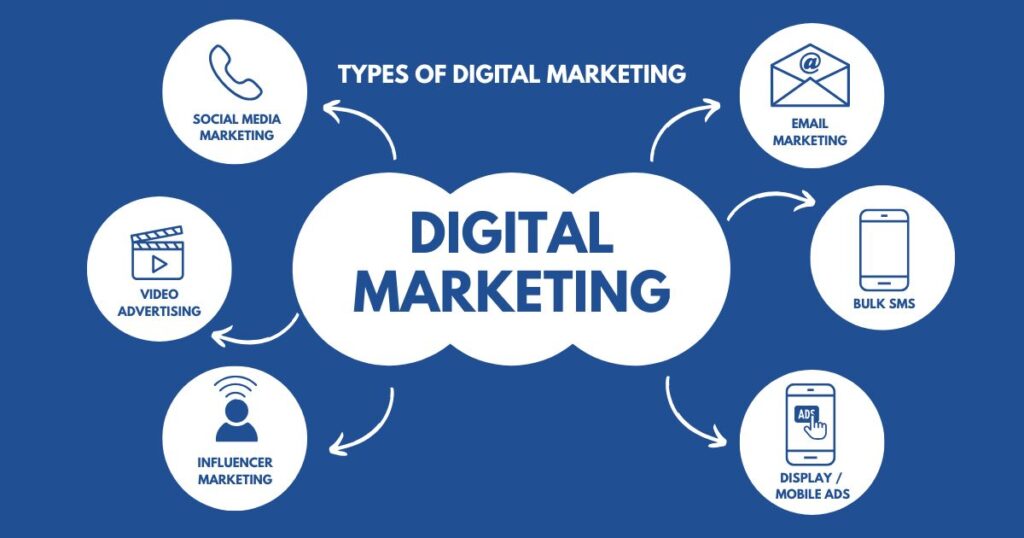
| Type of Digital Marketing | Meaning in Simple Words |
|---|---|
| Search Engine Optimization (SEO) | SEO helps websites rank higher on Google search results. It increases organic traffic by optimizing content, keywords, and website structure. |
| Content Marketing | This focuses on creating useful content like blogs, videos, and guides to attract and educate users instead of direct selling. |
| Social Media Marketing (SMM) | Marketing products or brands using platforms like Facebook, Instagram, LinkedIn, and X to engage users and build awareness. |
| Pay-Per-Click Advertising (PPC) | Paid ads where businesses pay only when someone clicks on their ads, commonly used on Google and social media platforms. |
| Email Marketing | Sending emails to customers to share updates, offers, and valuable information while building long-term relationships. |
| Affiliate Marketing | Promoting other companies’ products and earning a commission for every sale or lead generated through your referral link. |
| Influencer Marketing | Collaborating with influencers to promote products to their audience and increase trust and reach. |
Digital Marketing Examples
Real-Life Digital Marketing Examples
Real-life digital marketing examples are easy to notice in everyday online life. When you search for “best mobile phones” on Google and click a blog or shopping site, that is SEO in action. Seeing sponsored ads while scrolling Facebook, Instagram, or YouTube is an example of paid advertising. Getting discount emails from online stores is email marketing. Watching helpful YouTube videos that review products or explain topics is content marketing. When a blogger or YouTuber shares a product link and earns a commission from sales, it is affiliate marketing. These real-life examples show how digital marketing connects businesses with customers online.
Digital Marketing Examples in India
Digital marketing examples are very common in India today. When people search on Google for “best smartphones in India” and click blogs or comparison websites, it is an example of SEO. Ads shown on YouTube before videos or on Instagram while scrolling are paid digital ads. Indian brands using WhatsApp messages to share offers and updates is another form of digital marketing. Online stores sending festival discount emails use email marketing. Many Indian bloggers and YouTubers earn money by promoting products through affiliate links. These examples show how businesses in India use digital marketing to reach customers online effectively.
Digital Marketing for Beginners – Step-by-Step Roadmap
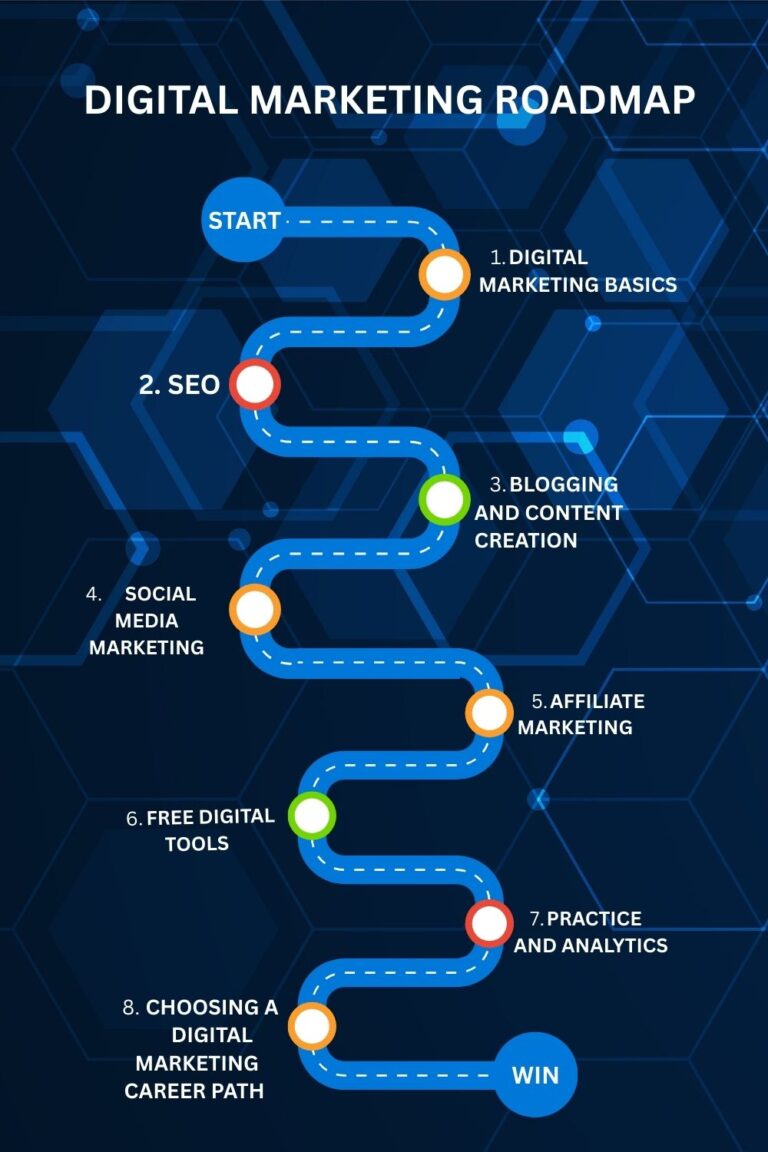
Starting digital marketing as a beginner can feel confusing, but following a clear roadmap makes it simple.
Step 1: Learn the Basics – Understand what digital marketing is, its types, and how online platforms work. Start with SEO, social media, and content marketing fundamentals.
Step 2: Choose One Skill – Focus on one area such as SEO, social media marketing, or content creation instead of trying everything at once.
Step 3: Practice with Free Tools – Use free tools like Google Search Console, Google Analytics, and social media platforms to gain hands-on experience.
Step 4: Build an Online Presence – Create a simple website, blog, or professional social media profile to apply what you learn.
Step 5: Create Valuable Content – Share helpful blogs, posts, or videos to attract users and build trust.
Step 6: Analyze and Improve – Track performance, learn from mistakes, and improve your strategy regularly. Consistency and practice are the keys to success in digital marketing.
Tools Used in Digital Marketing
Digital marketing tools help marketers plan, execute, track, and improve their online campaigns effectively. These tools save time and provide accurate data for better decision-making. Search engine optimization (SEO) tools like Google Search Console and keyword research tools help improve website visibility on search engines. Analytics tools such as Google Analytics track website traffic, user behavior, and conversions.
Social media tools help manage posts, comments, and engagement across platforms like Facebook, Instagram, and LinkedIn. Content creation tools are used to design graphics, write content, and edit videos for blogs and social media. Email marketing tools help send newsletters, promotional emails, and automated messages to customers.
There are also paid advertising tools used to run and manage ads on search engines and social platforms. Affiliate marketing and tracking tools help monitor links, clicks, and earnings. For beginners, many digital marketing tools are free or offer free plans, making it easy to start learning and practicing. Using the right tools helps improve performance, save effort, and grow faster in digital marketing.
Free Digital Marketing Tools
| Tool Name | Category | How It Helps Beginners |
|---|---|---|
| Google Search Console | SEO | Helps monitor website performance, fix indexing issues, and improve Google rankings. |
| Google Analytics | Analytics | Tracks website traffic, user behavior, and conversions for better decisions. |
| Google Keyword Planner | Keyword Research | Finds keyword ideas and search volume for content and ads. |
| Google Trends | Market Research | Shows trending topics and keyword popularity over time. |
| Canva (Free) | Design & Content | Creates social media posts, banners, and blog images easily. |
| Meta Business Suite | Social Media | Manages Facebook and Instagram posts, messages, and insights. |
| Mailchimp (Free Plan) | Email Marketing | Sends newsletters and automated emails to small audiences. |
| Ubersuggest (Limited Free) | SEO | Provides keyword ideas, SEO audits, and competitor insights. |
| Yoast SEO (Free) | On-Page SEO | Optimizes blog posts for SEO inside WordPress. |
| Bitly (Free) | Link Management | Shortens and tracks links for campaigns and social sharing. |
⇒ Use these free digital marketing tools Check Our Recommended Digital Marketing Tools & Courses.
Paid Digital Marketing Tools
| Tool Name | Category | How It Helps |
|---|---|---|
| Ahrefs | SEO & Backlink Analysis | Helps find keywords, analyze competitors, and track backlinks to improve rankings. |
| SEMrush | SEO & PPC | All-in-one tool for keyword research, site audits, ads, and competitor analysis. |
| Moz Pro | SEO | Improves on-page SEO, keyword tracking, and website health monitoring. |
| Google Ads | Paid Advertising | Runs paid search and display ads to get instant traffic and leads. |
| Meta Ads Manager | Social Media Advertising | Manages paid ads on Facebook and Instagram with advanced targeting options. |
| Mailchimp (Paid) | Email Marketing | Automates emails, audience segmentation, and advanced analytics. |
| Canva Pro | Design & Branding | Creates professional designs, brand kits, and marketing visuals faster. |
| Hootsuite | Social Media Management | Schedules posts, monitors engagement, and manages multiple accounts. |
| HubSpot | CRM & Marketing Automation | Manages leads, email campaigns, and customer relationships. |
| ClickFunnels | Sales Funnel Tool | Builds landing pages and sales funnels for higher conversions. |
👉 Start with free tools first, then upgrade to paid tools only when your traffic or income grows.
Digital Marketing Career Scope
Digital Marketing Jobs
| Job Role | Main Responsibilities | Best For |
|---|---|---|
| Digital Marketing Executive | Handles SEO, social media, content, and basic ads campaigns. | Beginners starting a career |
| SEO Executive / Specialist | Optimizes websites, keywords, and backlinks to improve Google rankings. | People interested in search engines |
| Content Marketer | Creates blogs, articles, videos, and website content. | Writers and creative learners |
| Social Media Manager | Manages posts, ads, comments, and engagement on social platforms. | Social media enthusiasts |
| PPC / Google Ads Specialist | Runs and optimizes paid ad campaigns to generate leads and sales. | Data-driven learners |
| Email Marketing Specialist | Designs email campaigns, newsletters, and automation. | Communication-focused users |
| Affiliate Marketer | Promotes products and earns commission per sale or lead. | Passive income seekers |
| Digital Marketing Analyst | Analyzes data, reports performance, and improves strategies. | Analytical thinkers |
| Influencer Marketing Manager | Works with influencers to promote brands and products. | Branding & outreach lovers |
| Digital Marketing Manager | Plans, manages, and scales overall digital marketing strategies. | Experienced professionals |
Freelancing with Digital Marketing
Freelancing with digital marketing allows individuals to work independently and offer services to clients online. Instead of working in a company, digital marketers can provide services like SEO, social media management, content writing, paid ads, and email marketing. Freelancers can find clients through platforms like Fiverr, Upwork, Freelancer, or LinkedIn. Digital marketing freelancing is popular because it offers flexible working hours, location freedom, and unlimited income potential.
Beginners can start by learning one skill, building a small portfolio, and working with a few clients at low rates. With experience and results, freelancers can increase prices and build a long-term online career.
How to Make Money with Digital Marketing?
Digital marketing offers multiple ways to earn money online. One common method is freelancing, where you provide services like SEO, social media management, content writing, or paid ads to clients. Another option is affiliate marketing, where you promote products or services and earn a commission on every sale made through your referral link. Blogging and content creation can generate income through ads, sponsored posts, and affiliate links.
Many people also earn by managing social media pages for brands. With experience, you can start your own digital marketing agency or sell online courses and services. For beginners, learning one skill and practicing consistently can lead to a stable and scalable income.
⇒ Read our special discussion on Carier In Digital Marketing.
Digital Marketing Salary in India
Beginner Salary
| Role | Experience Level | Average Monthly Salary (India) |
|---|---|---|
| Digital Marketing Executive | Fresher (0–1 year) | ₹15,000 – ₹25,000 |
| SEO Executive | Fresher | ₹12,000 – ₹22,000 |
| Social Media Executive | Fresher | ₹15,000 – ₹30,000 |
| Content Marketer | Fresher | ₹12,000 – ₹25,000 |
| PPC / Google Ads Executive | Fresher | ₹18,000 – ₹35,000 |
| Email Marketing Executive | Fresher | ₹15,000 – ₹28,000 |
| Digital Marketing Intern | Entry Level | ₹8,000 – ₹15,000 |
💡 Salary depends on skills, location, company size, and practical experience. Freelancers can earn more based on projects and clients.
Experienced Digital Marketer Salary
| Role | Experience | Average Monthly Salary |
|---|---|---|
| Digital Marketing Manager | 4–7 years | ₹60,000 – ₹1,20,000 |
| SEO Manager | 3–6 years | ₹50,000 – ₹1,00,000 |
| Performance Marketing Manager (PPC) | 3–6 years | ₹70,000 – ₹1,50,000 |
| Social Media Manager | 3–5 years | ₹45,000 – ₹90,000 |
| Content Marketing Manager | 3–6 years | ₹50,000 – ₹1,00,000 |
| Email & CRM Specialist | 3–5 years | ₹55,000 – ₹1,10,000 |
| Digital Marketing Consultant | 5+ years | ₹1,00,000 – ₹2,50,000+ |
💡 Experienced professionals earn more with specialization, certifications, and proven results. Freelancers and consultants can earn even higher based on clients and projects.
How Long Does It Take to Learn Digital Marketing?
Learning Time for Beginners
The time required to learn digital marketing depends on your learning pace and goals. For beginners, understanding the basic concepts usually takes 1 to 2 months with regular study and practice. Learning one specific skill such as SEO, social media marketing, or content marketing may take 2 to 3 months. To gain practical experience and confidence, beginners should spend 3 to 6 months practicing with real projects, websites, or social media pages. Digital marketing is not learned overnight; it improves with continuous practice and updates. Consistency, hands-on work, and learning from real results help beginners grow faster and succeed.
Skill-Based Learning Approach
A skill-based learning approach is the best way for beginners to learn digital marketing effectively. Instead of trying to master everything at once, beginners should focus on learning one skill at a time, such as SEO, social media marketing, content creation, or paid advertising. This approach helps build strong practical knowledge and confidence.
After learning the basics, beginners should practice the skill using real projects like a blog, website, or social media page. Once comfortable, they can move on to the next skill. Skill-based learning saves time, improves results, and makes it easier to find jobs or freelancing opportunities in digital marketing.
Is Digital Marketing Easy or Hard?
Common Challenges for Beginners
Beginners often face several challenges when learning digital marketing. One common problem is information overload, as there are many tools, strategies, and resources available online. Many beginners also struggle with lack of practical experience, knowing theory but not how to apply it. Understanding SEO and analytics may feel confusing at first. Another challenge is patience, as digital marketing results do not appear instantly, especially with SEO and content marketing.
Beginners may also fear making mistakes or feel unsure about choosing the right skill. With consistent practice, real projects, and step-by-step learning, these challenges can be overcome successfully.
Tips to Learn Digital Marketing Faster
To learn digital marketing faster, beginners should follow a focused and practical approach. Start by learning the basics clearly before moving to advanced topics. Choose one skill at a time, such as SEO or social media marketing, and practice it daily. Create a blog, website, or social media page to apply what you learn in real life.
Use free tools to gain hands-on experience. Follow trusted learning resources and stay updated with industry trends. Avoid jumping between too many courses at once. Consistency, experimentation, and learning from mistakes will help you master digital marketing faster and build confidence.
Digital Marketing Courses – Free vs Paid
Best Free Digital Marketing Learning Resources
| Platform / Resource | Type | What You Can Learn |
|---|---|---|
| Google Digital Garage | Free Course | Digital marketing basics, SEO, ads, analytics, and certifications |
| Google Skillshop | Free Training | Google Ads, Google Analytics, and performance marketing |
| HubSpot Academy | Free Courses | Content marketing, email marketing, SEO, and inbound marketing |
| YouTube | Video Learning | SEO, social media, ads, blogging, and real-life case studies |
| Moz Blog | Blog | SEO fundamentals, keyword research, and ranking strategies |
| Ahrefs Blog & YouTube | Blog + Videos | SEO, backlinks, content marketing, and tutorials |
| Meta Blueprint | Free Courses | Facebook and Instagram marketing, ads, and analytics |
| LinkedIn Learning (Free Trials) | Courses | Digital marketing, branding, and professional skills |
| Blogs & Case Studies | Reading | Latest trends, strategies, and real-world examples |
| Online Communities & Forums | Community | Practical tips, discussions, and beginner support |
When to Choose a Paid Course
Choosing a paid digital marketing course makes sense when you already understand the basics and want structured, in-depth learning. If you feel confused by free resources or need step-by-step guidance, a paid course can save time. Paid courses are useful when they offer practical projects, expert mentorship, certifications, or placement support. Beginners who want faster skill development or career-focused training may benefit from paid programs.
However, a paid course is not mandatory at the start. Learn fundamentals through free resources first, then invest in a paid course only when you are clear about your goals and ready to apply the skills professionally.
Frequently Asked Questions (FAQs)
Digital marketing means promoting products, services, or brands using the internet. It includes marketing through search engines, social media, websites, email, and online ads. Digital marketing helps businesses reach the right audience online, track results, and grow faster at a lower cost than traditional marketing.
Yes, digital marketing is very beginner-friendly. Anyone with basic internet knowledge can start learning it. You do not need technical or coding skills initially. With step-by-step learning, practice, and consistency, beginners can build skills and start a career or online income in digital marketing.
For beginners, learning basic digital marketing concepts usually takes 1 to 2 months. Gaining practical skills in one area like SEO or social media marketing may take 2 to 3 months. With regular practice, most beginners become confident within 3 to 6 months.
Yes, you can learn digital marketing without technical skills. Most digital marketing tools are user-friendly and do not require coding. Skills like content creation, social media management, SEO basics, and email marketing are easy to learn for non-technical beginners.
Digital marketing is a strong career option in India due to the growth of internet users and online businesses. Companies, startups, and agencies actively hire digital marketers. Freelancing and online earning opportunities also make digital marketing a flexible and high-demand career.
Beginners can start digital marketing from home by learning basics through free courses, choosing one skill, and practicing on a blog or social media page. Using free tools and creating real projects helps gain experience without investing much money.
Yes, beginners can make money with digital marketing by offering freelance services, doing affiliate marketing, blogging, or managing social media accounts. Starting with small projects and improving skills over time helps build income and long-term career growth.
Final Thoughts
Digital marketing is one of the most valuable skills in today’s digital world, especially for beginners who want to build a career, start a business, or earn online. With the rapid growth of the internet and smartphone users, digital marketing has become essential for companies of all sizes. The best part is that anyone can start learning digital marketing without prior experience or technical knowledge.
For beginners, success in digital marketing depends on learning the basics clearly, choosing one skill at a time, and practicing consistently. Free learning resources and tools make it easier than ever to gain practical experience. As skills improve, opportunities in jobs, freelancing, blogging, and online business also grow. Digital marketing is not about shortcuts or overnight success—it is about patience, learning from mistakes, and adapting to changes.
Whether your goal is to get a job, work as a freelancer, build a personal brand, or grow your own business, digital marketing provides long-term growth and flexibility. Start small, stay consistent, and keep learning. With the right approach and dedication, digital marketing can open the door to endless opportunities in the digital age.