
Best Online Data Entry Jobs Without Investment
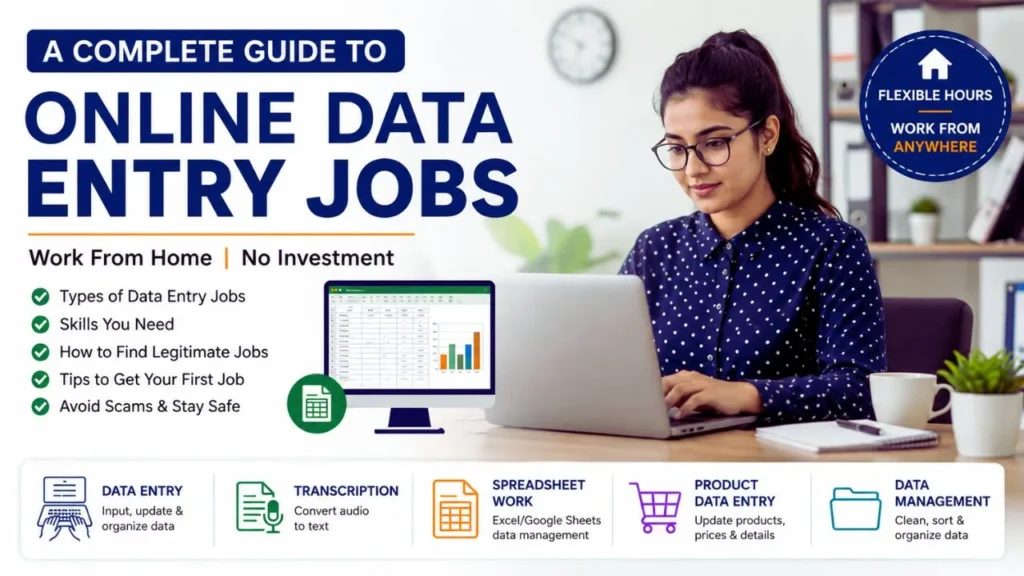
Finding a reliable way to earn money from home can be quite challenging, especially for beginners who do not wish to spend money on courses, software, or registration fees. For those with basic computer knowledge, good typing skills, and an eye for detail, online data entry work can be an excellent option requiring no financial investment.
Data entry tasks typically involve inputting, updating, organizing, or verifying information using tools like Microsoft Word, Excel, Google Sheets, and various online platforms. Some of these roles can be performed as remote jobs, while others are available through freelance marketplaces.
However, not all online data entry job listings are legitimate or reliable. Some websites may demand upfront fees or promise unrealistic earnings. Therefore, it is essential to understand the different types of data entry work, the required skills, where to find genuine opportunities, and how to spot potential scams.
In this guide, we will discuss the best online data entry jobs that require no investment, the necessary skills, reliable platforms for finding work, potential earnings, and practical tips for getting started from home.
Many people don’t know about Data Entry Jobs. They don’t know How we can get data entry jobs from home? We can get a good job with data entry skills. From this article, you will known about the Best Online Data Entry Typing Work From Home Without investment.
What Is Data Entry Jobs?
Data Entry Jobs are similar to clerical work. This job is involving various types, such as data typing, data updation, voice recording, informatics, data transfer, image-to-text, text-to-image transfer, conversation, pdf reservation, article writing, product description writing, etc inputting into the computer by data typing work. All types of product lists, invoices making, goods, services, etc are listed by data entry works in all companies, the government sector, and the private sector.
What is data entry?

Data entry is the process of inputting, updating, organizing, or verifying information within computer systems, spreadsheets, databases, or online platforms. This information can originate from various sources, such as documents, forms, invoices, emails, images, audio files, and more.
A data entry professional may use tools like Microsoft Word, Microsoft Excel, Google Sheets, and data management software to perform tasks accurately. Depending on the specific role, the work might involve typing information, transferring data between formats, updating existing records, verifying data for errors, or systematically organizing large volumes of data.
Opportunities for data entry work exist across various sectors, including e-commerce, healthcare, education, finance, customer service, logistics, and administration. Some positions are office-based, while others can be performed remotely or through freelance platforms.
For beginners, data entry can be an accessible entry point into online work; many routine tasks require only basic computer knowledge, decent typing speed, attention to detail, and the ability to follow instructions. However, it is important to note that legitimate employers generally do not ask applicants to pay a fee to secure a job.
It is also important to understand that data entry is distinct from fields like data analysis, data science, and data engineering. Those fields require advanced technical and analytical skills, whereas the primary objective of traditional data entry is the accurate management and storage of information.
Types of Data Entry Jobs
Data entry is not limited to simple typing. Depending on the employer or client, data entry professionals may perform various tasks—such as filling out forms, creating spreadsheets or documents, managing product information, transcribing audio files, and maintaining existing databases. Some common online data entry jobs are listed below.
Online Form Filling
Online form filling involves inputting data into digital forms, applications, surveys, or business systems. This information may include names, contact details, product data, customer records, or other details provided by the client.
Accuracy is crucial here, as even a minor error can result in incorrect submitted data. Before starting such work, always verify the reliability of the employer or platform and check if they are demanding any unnecessary upfront payments.
Data Transcription
Data transcription involves converting information or audio into written form. For example, a transcriptionist might listen to an audio recording and type the spoken words into a document.
Transcription tasks can cover interviews, meetings, lectures, customer conversations, or other recordings. Skills such as good listening ability, typing accuracy, correct spelling, and attention to detail are highly beneficial for this work.
Data Conversion
Data conversion involves changing information from one format or file type to another. For instance, a client might ask you to convert data from a PDF document into an editable Word or Excel file.
Depending on the project, the work may also include verifying the converted data and correcting formatting or typing errors. Data Cleaning and Updating
Data cleaning involves verifying existing information and correcting records that are erroneous, incomplete, duplicated, or outdated. For instance, a business might need to update customer details, remove duplicate entries, or fix spelling errors within a database.
Such tasks require meticulous attention to detail, as the primary objective is to maintain accurate and organized records.
Spreadsheet Data Entry
Spreadsheet data entry involves inputting and organizing information in applications like Microsoft Excel or Google Sheets. Tasks may include adding customer details, updating inventory records, organizing lists, or entering sales-related data.
Basic spreadsheet skills—such as sorting, filtering, formatting, and using simple formulas—can help you handle a wider range of data entry projects.
Product Data Entry
Product data entry is a common task in e-commerce businesses. It involves adding or updating product information for an online store or marketplace. Typical details include the product name, description, price, category, stock status, size, color, and other specifications. Accuracy is crucial, as incorrect product information can negatively impact customers and online sales.
Document Formatting
Document formatting refers to organizing the layout of information within a document and enhancing its visual appearance or presentation. A client might provide you with disorganized or unstructured content and ask you to properly arrange elements such as headings, paragraphs, tables, spacing, fonts, or page layouts.
Microsoft Word and similar document-editing tools are typically used for this type of work. Strong formatting skills are highly beneficial when working with reports, business documents, forms, and other digital files.
The following types of data entry works are available:
- Online form fillup
- Online Survey
- Captcha entry
- Copy-Pest works
- Formatting and editing
- Content writing
- Product review writing
- Text to image
- Image to text
- Audio to text
- Data updation
- clerical works
- Data collection, and many more.
Friends you will get many types of data entry jobs. Clients will give you all the documents, you just type them properly in MSWord, MS-Excel, and give PDF to the client. That’s your job. Very simple matter.
Skills Required for Data Entry Jobs
Many entry-level data entry jobs do not require advanced technical knowledge. However, possessing basic computer and communication skills makes it easier to complete tasks accurately and opens up better opportunities.
Typing Skills
Good typing speed and accuracy are essential for most data entry jobs. You may be required to enter names, numbers, addresses, product details, or other information into various documents and spreadsheets.
While speed is important, accuracy is more critical than typing quickly. With regular practice, you can improve both your speed and accuracy over time.
MS Word Skills
Having basic knowledge of Microsoft Word is very useful when working with documents. You should know how to type and edit text, format paragraphs, create tables, adjust page layouts, and save documents in standard file formats.
These skills are frequently required for document-based data entry and formatting tasks.
Excel and Google Sheets Skills
Many data entry projects involve the use of spreadsheets, so basic knowledge of Microsoft Excel or Google Sheets is highly valuable. You should be comfortable entering data into rows and columns, formatting cells, sorting data, filtering records, and performing basic mathematical calculations.
Mastering these basics can also make you eligible for various freelance projects involving spreadsheets.
Internet Skills
Data entry professionals often use the internet to access online platforms, cloud-based documents, email, databases, and various communication tools. You should know how to search for information, upload and download files, use email, and work while maintaining the security of online accounts. Understanding the basics of online security is also essential. Never share passwords, banking details, or sensitive personal information with an unfamiliar or unverified employer or client.
Attention to Detail
Attention to detail is a crucial skill for data entry work. Even a minor error in spelling, numbers, or formatting can render a record incorrect or flawed.
Before submitting your work, thoroughly verify the data you have entered and, if necessary, cross-check it against the original source. Cultivating a habit of regular verification can help improve the quality of your work and build client trust.
How much can you earn from data entry?

Your earnings from data entry depend on several factors—such as your work experience, typing accuracy, the nature of the work, working hours, location, and whether you are employed by a company or working as a freelancer. There is no fixed pay rate for all data entry jobs.
When starting out, workers often begin with relatively simple tasks that offer lower pay. As your skills in typing, spreadsheet management, transcription, and document handling improve, you can qualify for more specialized or complex projects that offer higher compensation.
If you work as a freelancer, your income may be determined by an hourly rate, a fixed project fee, the volume of data processed, or another method agreed upon with the client. Consequently, your actual monthly income may fluctuate depending on the amount of work you secure.
For instance, a new worker might start with small projects to build a portfolio and earn positive client reviews, rather than focusing solely on maximizing immediate income. As you gain experience, you can gradually take on more complex tasks such as spreadsheet management, product data entry, transcription, or virtual assistance.
It is important to be cautious of websites that promise exceptionally high daily earnings for basic data entry work. Legitimate employers or freelance clients usually clearly outline the nature of the work, payment terms, and requirements. You should be wary if anyone asks for registration, training, a security deposit, or processing fees before assigning work.
Therefore, instead of expecting guaranteed income from online data entry, focus on acquiring the necessary skills, finding reliable work opportunities, and building a solid work history.
Best Online Data Entry Jobs
There are various types of online data entry jobs available. You can choose the role that best suits you based on your skills, experience, typing speed, and personal preferences. Below are some common types of data entry jobs:
Data Entry Clerk
A data entry clerk is responsible for entering, updating, and verifying information in a company’s databases, spreadsheets, documents, or online systems. Typical tasks include inputting customer details, updating records, verifying data, and organizing digital files.
For those with basic computer knowledge and a keen eye for detail, this can be an excellent entry-level role.
Virtual Assistant
A Virtual Assistant (VA) provides administrative support remotely. While data entry may be part of the job, the role can also encompass tasks such as managing spreadsheets, organizing files, updating information, handling emails, scheduling appointments, and conducting general online research.
Virtual assistant roles offer more variety than standard data entry jobs but may require stronger communication and organizational skills.
Transcriptionist
A transcriptionist converts audio or video recordings into written text. Depending on the project, you might be required to transcribe content from interviews, meetings, lectures, podcasts, or business recordings.
Transcription work requires strong listening skills, accurate typing, a solid grasp of spelling and grammar, and attention to detail. Certain specialized transcription roles may also require knowledge of a specific industry or sector. Spreadsheet Data Entry Specialist
A Spreadsheet Data Entry Specialist primarily works on entering, organizing, updating, and verifying data using tools like Microsoft Excel and Google Sheets.
Their responsibilities may include maintaining customer lists, inventory records, sales data, contact databases, or other business-related information. Proficiency in managing spreadsheets allows you to handle more complex or advanced projects over time.
Product Data Entry Specialist
A Product Data Entry Specialist manages product information for online stores, e-commerce businesses, or marketplaces. Tasks may involve inputting details such as product names, descriptions, prices, categories, images, specifications, and inventory data.
Accuracy is crucial in this role, as customers rely on this information when making purchasing decisions. Familiarity with spreadsheets and e-commerce platforms is advantageous for this type of work.
Best Data Entry Jobs Sites:
You can join the following popular websites for data entry jobs. They are very reliable and pay well. But you need to know good work. Otherwise, you cannot work on these sites.
- FlexJobs
- Fiverr.com
- Upwork.com
- Freelancer.com
- WorKink Solutions
- Xerox
- People Per Hour
- Truelancer
- Remotehub.com
How to Find Data Entry Jobs with No Investment

It is possible to find reliable data entry jobs without any investment; however, you must choose job platforms carefully and avoid offers that demand payment before assigning work. Generally, legitimate jobs do not require any registration or job-placement fees.
Follow the steps below to get started:
1. Build Your Basic Skills
Before applying, improve your typing accuracy and learn the basics of Microsoft Word, Excel, or Google Sheets. These skills will help you complete standard data entry tasks more efficiently.
2. Create a Simple Resume
Prepare a clean resume that clearly outlines your typing skills, computer knowledge, spreadsheet proficiency, previous experience, and relevant education or training. If you are a beginner, focus on your current skills rather than claiming experience you do not actually have.
3. Create a Professional Freelance Profile
Set up a profile on established freelance marketplaces and clearly specify the types of data entry services you offer. Highlight specific skills such as spreadsheet data entry, document formatting, data cleaning, or product data entry.
4. Look for Relevant Jobs
When searching for opportunities, use keywords such as ‘data entry’, ‘data entry clerk’, ‘spreadsheet data entry’, ‘virtual assistant’, ‘product data entry’, and ‘transcription’.
Read the full job description before applying. Carefully verify the required skills, workload, payment terms, and client information.
5. Start with small projects
If you have little to no experience, consider applying for smaller projects first. Successfully completing real projects will help you gain practical experience, earn positive client reviews, and build a portfolio.
Never accept a project that promises unusually high earnings for very little work.
6. Never pay to get a job
One of the most important rules is never to pay anyone to secure a job. Exercise extreme caution if someone asks for money citing registration, security deposits, training, document verification, software activation, or guaranteed employment.
While some reliable platforms may have their own service fees or optional paid features, a demand for money from an unknown individual before assigning work is a completely different matter.
7. Verify the employer or client
Before sharing sensitive information or accepting a job offer, research the company or client. Check for an official website, verifiable contact details, a clear job description, and a reasonable payment process. If an offer seems too good to be true, scrutinize it thoroughly before taking any action.
8. Keep records of your work and payments
Save important project instructions, contracts, invoices, and copies of completed work. When using freelance marketplaces, conduct all communications and transactions through the platform’s official channels whenever possible.
By acquiring necessary skills, using reliable job platforms, and avoiding scams involving upfront fees, newcomers can increase their chances of finding legitimate online data entry work without making unnecessary financial investments.
How to Avoid Scams in Data Entry Jobs
Online data entry job opportunities can attract scammers because many new workers are looking for easy, work-from-home jobs. Fake job offers may promise unusually high earnings or ask for upfront payments or sensitive personal information before the work begins. Recognizing these warning signs can help you protect your money and personal data.
Never Pay Upfront Fees for a Job
Be cautious if someone demands a registration fee, security deposit, processing fee, training fee, or software fee before the work starts.
While a request for money does not automatically mean the opportunity is a scam, an unexpected request for upfront payment should be viewed as a major red flag requiring thorough verification.
Beware of Unrealistic Income Promises
Scammers often claim that one can earn a large amount of money daily through simple typing tasks. Legitimate jobs clearly outline the nature of the work, payment methods, expectations, and required qualifications; they do not guarantee unusually high earnings for minimal effort.
If an offer seems too good to be true, do your research before accepting it.
Verify the Company
Before applying for a job or accepting an offer, look up the company’s official website and contact details. Verify whether the job is listed on the company’s legitimate ‘Careers’ or recruitment page and confirm that the person contacting you is indeed a representative of that organization.
Do not rely solely on screenshots, social media profiles, or messages sent via messaging apps as proof that the job is genuine.
Protect Your Personal Information
Do not readily share sensitive information—such as passwords, banking PINs, OTPs, or copies of important identity documents—with strangers.
While legitimate hiring processes may require specific information at the appropriate time, always verify who is asking for sensitive data and why before sharing it. Be cautious of suspicious links and files
Refrain from downloading files or clicking links sent by unknown individuals or unverified recruiters. Fake job offers are often used to spread malware or steal login credentials.
If a link claims to direct you to a company’s website, do not rely on the link provided in the message; instead, visit the company’s official website directly.
Use reliable job platforms
Established job boards and freelance marketplaces offer added security, though no platform can guarantee with 100% certainty that every job posting is legitimate. Before accepting a job, verify the client’s profile, reviews, payment history (if available), and project details.
Trust your instincts
If a recruiter pressures you for quick payment, refuses to clearly explain the work, communicates only through suspicious channels, or evades answers to basic questions about the job—exercise caution and thoroughly vet the situation before proceeding.
Remember: A legitimate data entry job opportunity will clearly outline the tasks involved and the payment terms. Spending a few minutes verifying the opportunity can help you avoid risks such as financial loss or the exposure of personal information.
How to Land Your First Data Entry Job
Securing your first online data entry job can be challenging, as many clients prefer candidates with prior experience. However, you can boost your chances by acquiring the necessary skills, creating a professional profile, and starting with practical projects.
1. Improve Typing Accuracy
Practice typing regularly and prioritize accuracy over speed. Data entry clients value precise information entry; therefore, avoiding errors is often more important than typing extremely fast.
2. Learn Excel and Google Sheets
Dedicate time to learning commonly used spreadsheet features—such as sorting, filtering, formatting, basic formulas, and data organization. These skills will qualify you for a wider range of data entry projects.
3. Create Sample Work
If you lack prior experience, create a few simple sample projects to showcase your skills. For instance, you could create a well-organized spreadsheet, format a sample document, or compile a product information sheet using hypothetical data.
A small portfolio helps potential clients understand the type of work you are capable of handling.
4. Create a Clear Profile
When setting up a freelance profile or resume, clearly specify the services you offer. Instead of simply stating “I do data entry,” mention specific tasks—such as Excel data entry, PDF-to-Excel conversion, document formatting, data cleaning, or product information entry.
5. Apply for Suitable Jobs
Do not apply indiscriminately to every data entry job posting. Read the job description carefully and apply only if your skills align with the job requirements.
Sending a brief, personalized proposal—explaining exactly how you intend to complete the specific task—is far more effective than sending the same generic message to every client.
6. Start with manageable projects
As a beginner, it is often easier to successfully complete smaller projects. Instead of taking on overly complex or unrealistic assignments, your initial goal should be to gain practical experience and build a positive work history.
7. Communicate professionally
Provide clear responses, ask relevant questions if instructions are unclear, and keep the client updated on the project’s progress as needed. Good communication fosters trust and can lead to future work opportunities.
8. Adhere to deadlines
Always check the deadline before accepting a project. If you agree to submit work by a certain date, make every effort to deliver accurate work on time.
Delivering work reliably is one of the easiest ways to build a strong reputation as a freelancer. 9. Avoid claiming false experience
Do not claim to have completed projects or used software with which you have no actual experience. While building a credible profile may take some time, genuine skills and experience are far more valuable for a long-term freelance career.
10. Keep learning
Data entry work often overlaps with tasks such as virtual assistance, e-commerce support, transcription, and spreadsheet management. Mastering these related skills alongside your core experience can open up a wider range of remote work opportunities.
The key is to start small, complete work accurately, gradually build your reputation, and remain cautious when evaluating online job offers.
Also Read:
- How to Earn Money Online with out any investment
- How to Find Low-Competition Keywords
- How to Start Affiliate Marketing Without a Website
- Best Free Tools to Make Money Online in India
- 5 Best Ideas For Online Income Without Money
- 50 Best Affiliate Programs to Earn Passive Income Online
- 10 Best AI Tools to Make Money Online — Turn AI Into Income
- 5 Best Ways to Earn Money Online Without Any Website in 2026
- Best Free Tools to Make Money Online in India
- Earn Money Online With Affiliate Marketing
Conclusion:
For those interested in remote or freelance work, online data entry can be a viable option. Basic skills—such as typing and proficiency in Microsoft Word, Excel, Google Sheets, and internet usage—combined with an eye for detail, can help beginners get started.
However, finding reliable online data entry work without any upfront investment requires patience and careful research. Avoid unrealistic income promises, verify employers and clients, and never pay anyone based solely on a job offer.
If you are a beginner, you can start by honing your basic computer skills, creating a simple resume or freelance profile, preparing work samples, and applying for suitable entry-level projects. As you gain experience, you can also develop related skills such as virtual assistance, spreadsheet management, transcription, and e-commerce support.
While data entry work may not guarantee immediate or fixed income, building reliable skills and a solid work history can help you secure legitimate opportunities and advance your career in remote work over time.
Frequently Asked Questions (FAQ)
1. Can I do data entry work from home without any investment?
Yes, it is possible to do legitimate data entry work from home without paying any upfront or registration fees. You can find such opportunities through reputable job portals and freelance platforms. However, always thoroughly vet the employer or client before accepting a job.
2. What skills are required for online data entry work?
Basic computer knowledge, accurate typing skills, proficiency in Microsoft Word, Excel, or Google Sheets, internet usage skills, and attention to detail are all beneficial for data entry work. Additionally, communication and organized work management skills can help you secure better opportunities.
3. Is data entry work suitable for beginners?
Yes. Many entry-level data entry jobs do not require advanced technical knowledge. Beginners can start by improving their typing accuracy and learning the basic tools for creating documents and spreadsheets. Gaining experience through small, reliable projects can also be helpful.
4. How much can one earn from data entry work?
Earnings from data entry can vary based on the type of work, experience, location, working hours, the employer, and the payment method. Freelancers may be paid on an hourly, project, or task-specific basis. There is no fixed income rate for all data entry workers.
5. Where can I find legitimate online data entry jobs?
You can explore established job portals and freelance marketplaces such as Upwork, Fiverr, Freelancer, FlexJobs, PeoplePerHour, and Truelancer. Before accepting a job, always verify the job description, client information, reviews, and terms regarding payment or remuneration.
6. Are specific qualifications required for data entry jobs?
There is no single specific qualification required for all data entry positions; requirements depend on the employer and the nature of the work. For many entry-level roles, computer skills, accurate typing, and attention to detail are prioritized over specific academic degrees.
7. How can I identify fake or fraudulent data entry jobs?
Be cautious of offers that promise unusually high earnings for simple tasks, pressure you to make a quick decision, or ask for money before assigning the work. Additionally, research the company, avoid clicking on suspicious links, and never share passwords, OTPs, or other sensitive information with unknown or unverified individuals.
8. Is a computer required for online data entry work?
A computer or laptop is generally more convenient for professional data entry, as many tasks require Microsoft Excel, Google Sheets, document editing, file management, and other desktop-based tools. A reliable internet connection is also highly beneficial for remote work.
9. Is typing speed important for data entry?
While typing speed can increase productivity, accuracy is usually more important. Frequent errors while entering data quickly can compromise the quality of your work. Beginners should focus on improving both speed and accuracy through regular practice.
10. Can data entry lead to other remote job opportunities?
Yes. Data entry can help you acquire transferable skills suitable for roles such as virtual assistant, e-commerce support, spreadsheet management, transcription, and administrative support. Acquiring additional digital skills can expand the range of remote job opportunities available to you.
About the Author:

Founder of Toppez Digital
I’m Sona Bera Kar, the founder of Toppez Digital and a digital marketing professional with over five years of experience in SEO, blogging, WordPress, AI tools, and affiliate marketing. Through Tech Terapias, I share practical, research-backed, and experience-based insights, guides, and advice on digital marketing and technology. My goal is to help bloggers, content creators, entrepreneurs, and business owners build better websites, improve their search visibility, and grow their online presence and businesses with confidence.